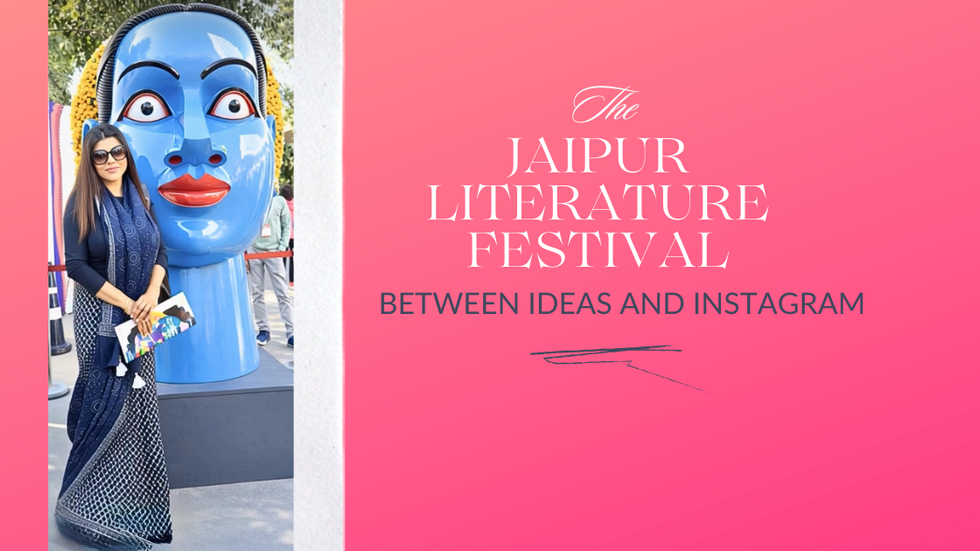
Asia-Pacific’s largest literary gathering, the Jaipur Literature Festival has earned its title as the “greatest literary show on Earth.” Each January, Jaipur becomes a living manuscript — five days of writers, thinkers, activists and Nobel Laureates in open dialogue. The 19th edition in January 2026 reaffirmed what JLF does best: create space for ideas to collide.
The festival first entered my consciousness in 2012, when Salman Rushdie withdrew amid threats surrounding The Satanic Verses. That moment did not simply signal controversy; it underscored literature’s ability to provoke, disturb and demand courage. JLF ceased to be a cultural gathering. It became a barometer of intellectual freedom.
For literary purists, JLF remains a haven. Over time, however, it has evolved into a literature cult — part intellectual pilgrimage, part social spectacle. The original venue, Diggi Palace, with its Rajasthani arches and intimate courtyards, lent conversations a natural gravitas. The move to Clarks Amer introduced scale, polish and infrastructure. The organisers retained the spirit, yet nostalgia for Diggi Palace lingers like an unfinished stanza.
The most visible shift is not merely spatial but cultural. The rise of Instagrammable selfie points now serves parallel purposes: drawing readers into the monochrome rigour of black-and-white text while simultaneously offering dollops of colour and curated framing for self-love — often in place of self-reflection. The festival has pivoted from predominantly academic engagement to a more entertainment-driven, visually orchestrated ecosystem. Panels trend. Authors become moments. Literature coexists with branding, performance and aesthetic theatre.
Yet beneath the optics, the intellectual core holds. The sessions are engaging and unvarnished. Perspectives span continents and genres. Conversations are candid rather than rehearsed. One leaves with insight — sometimes challenged, sometimes affirmed — but rarely untouched.
I have attended twice and would return in 2027, selectively. To curate my own schedule. To immerse in chosen dialogues. To wander through art installations. To pause for folk music and bursts of colour between weighty exchanges.
JLF today is not merely about books. It is about the theatre of ideas — serious and performative in equal measure — but unmistakably alive.