Gen Z: Protest, But Do Not Become Psychological Hostages!
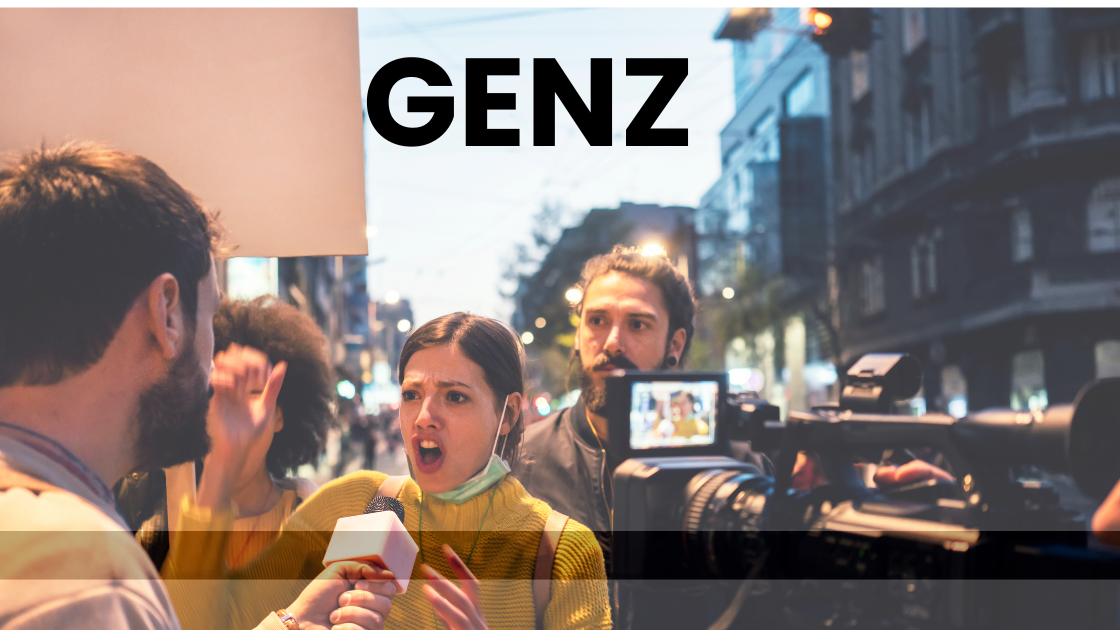
As a parent of two Gen Z sons, I watched the recent protests at Jantar Mantar with concern—not because young people raised their voices, but because a legitimate demand for educational accountability appeared, at times, to become entangled with a much wider political campaign.
The leakage of an examination paper is indefensible. It damages public confidence, compromises merit and inflicts enormous psychological and financial hardship on students and their families. Those responsible must be investigated, prosecuted and punished. Institutional failures must be acknowledged, and examination systems must be rebuilt with stronger safeguards.
However, accountability cannot be reduced to slogans, social-media trends or the resignation of one minister. A resignation may provide political closure, but it does not automatically repair an examination system. Genuine reform requires transparent investigations, technological safeguards, administrative restructuring, independent oversight and measurable accountability at every level.
My personal observation of the gathering was also unsettling. The number of people who appeared to be actual students seemed considerably smaller than the broader crowd surrounding the movement. Opposition representatives, habitual government critics and individuals with unrelated political grievances appeared to occupy significant space within what was projected as a purely student-led cause.
That does not invalidate the students’ concerns. It does, however, raise a question every young protester must ask:
Am I advancing my own cause, or am I becoming the face of someone else’s political strategy?
Democratic protest is a constitutional right. Political accountability is essential. But dissent without verification can quickly become manipulation, particularly when social-media algorithms repeatedly feed users the same opinions, outrage and emotional narratives.
Gen Z possesses unprecedented access to information, technology and opportunity. Yet access to information is not the same as knowledge. A viral reel is not evidence. A forcefully expressed personal opinion is not investigative journalism. A trending hashtag is not necessarily the national consensus.
Our generation grew up reading newspapers, books and magazines that exposed us to credible competing viewpoints. We were required to listen to arguments we disliked and evaluate both sides before forming a position. Today, algorithms frequently construct personalised realities. They show people more of what they already believe, creating an illusion that everybody intelligent or morally responsible must agree with them.
That is not awareness. It is an echo chamber.
Everything is flawed—governments, companies, institutions, brands and individuals. No system can permanently conceal its imperfections behind a carefully curated image. Unlike a picture-perfect GenZ with filters, countries, institutions and systems cannot permanently camouflage their flaws. The fault lines eventually show, exposing weaknesses that no carefully curated image can conceal.The flaws eventually become visible. It is easy to criticise a system. It is far harder to build one.
Get educated. Develop expertise. Face the difficult phases of life. Compete for a position and learn what professional excellence demands. Build a business. Create a brand. Establish a school. Launch a credible start-up. Enter public service. Train until every bone in your body understands what it takes to become a champion. Then use that experience to reform the institutions you once criticised.
Many members of Gen Z have grown up with greater personal space, greater parental protection and instant technological convenience. Essays can now be produced through a prompt. Previous generations memorised long passages from Shakespeare and recited them without error. Neither experience automatically makes one generation superior, but struggle, discipline and delayed gratification build capacities that technology cannot download.
Some young people hide behind anonymous profile pictures while making sweeping judgments about governments, institutions and even their own parents. They sometimes treat their parents as though they are an upgraded smartphone model looking down upon an outdated device that is still “loading.”
Schools have also gradually moved away from structured moral education. Respectful language, civic responsibility, patience and accountability are increasingly treated as old-fashioned ideas. Vulgarity is defended as authenticity, disrespect as confidence, and instant condemnation as intellectual independence.
But being loud is not the same as being courageous.
Using social media also requires honest self-examination. Businesses use it strategically to communicate with relevant audiences and generate measurable outcomes. Many young users, however, become trapped in the pursuit of likes, views and validation from people who may give them only five seconds of attention before scrolling away.
That is not community. It is temporary digital consumption.
The government’s decision to concede to the protesters’ demands may be projected as a victory for Gen Z, but to me it was as a protective intervention. By responding before the agitation was further exploited, the government arguably prevented genuine student concerns from being overtaken by anti-national, extremist or politically motivated elements seeking to convert academic distress into a broader campaign of instability. The outcome should therefore not be interpreted as proof that every “Dipke-Style” led movement is independent, ethical or factually sound, but as a reminder that responsible governance sometimes requires acting decisively to protect young people from becoming instruments of agendas they may neither fully understand nor consciously endorse.
The more meaningful victory will come when examination security is genuinely strengthened, guilty individuals are convicted, students regain confidence in merit-based selection, and political parties can no longer exploit their anxiety.
- GenZ do not remain silent- but become more discerning.
- Question the government—but also question the opposition.
- Question the media—but also question influencers.
- Question institutions—but also question your algorithm.
- Question your parents—but first understand the lives they lived.
Protest where protest is justified. Demand evidence. Read beyond captions. Examine competing arguments. Refuse to become a pyschological hostage to any political party, ideological group or online personality.
India was built through the labour and sacrifice of generations before you. Its future will certainly be shaped by Gen Z. But that future cannot be constructed through outrage you seem to take pride in today.
It will require education, competence, discipline, moral courage and the willingness not merely to expose imperfect systems—but to build better ones.